Is a Ground-Up Tooth a Smart Business Move? (Spoiler: Yes)
The tooth you were about to throw away might be the best deal in your operatory.
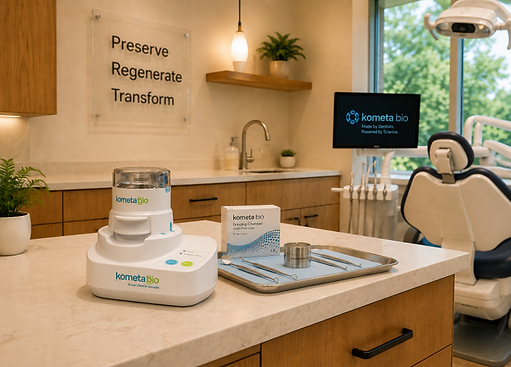
Let’s talk money, because a good clinical idea only sticks around if it also makes sense on the balance sheet. Autologous dentin grafting does both, and the financial story is surprisingly simple: the graft material is free.
Think about a typical extraction. That tooth normally goes straight into the biohazard bin. With a dentin graft, that same tooth becomes premium, patient-matched grafting material right there at the chair. You’re not opening a vial of processed bovine or cadaver bone that you paid real money for and can only guess how much you’ll actually use. You’re turning something you were paying to dispose of into the exact material the socket needs.
The costs you don’t see anymore
The obvious saving is the graft itself — no per-procedure spend on bottled substitutes. But the bigger wins are the ones that hide in your schedule. There’s no second surgical site the way there is when you harvest the patient’s own bone from the chin or ramus, which means less chair time, less post-op morbidity, and fewer things that can go sideways. The whole grind-and-clean process runs chairside in about 15–20 minutes, in the same visit as the extraction. No shipping, no tissue bank, no waiting.
It’s a practice-builder, not just a procedure
Here’s the part that gets overlooked. When you preserve the ridge at the moment of extraction, you’re setting the stage for an implant down the road — and keeping that future case inside your own practice instead of referring the whole thing out. Socket preservation today often means a cleaner, simpler implant tomorrow, which is better for the patient and better for you. The device itself pays for itself over a modest number of cases and then keeps earning.
And the patient wins too
Patients feel this in ways they’ll actually thank you for: often fewer visits, no second surgery to harvest bone from somewhere else, and their own tissue doing the work. A preserved ridge can also mean a smoother implant path later — sometimes avoiding a bigger, pricier augmentation procedure down the line. That’s a rare win-win: the smart clinical choice and the smart financial one happen to be the same choice.
Curious what the numbers look like for your practice? Take a look at our Economics page — or reach out and we’ll walk you through it.


Comments